Field Work
Creating your Forestry Individual Safety Plan
The field safety planning process consists of multiple steps, culminating in the creation of this plan. Individual safety plans are currently required at the departmental level within the Faculty of Forestry. These must be completed before field work.
Field Sites
Team Shrub works in several field locations across the Yukon and Alaska, including in Kluane, Kusawa, Ivvavik, Qikiqtaruk and Tombstone territorial and national parks. Some of our long-term projects are based in Kluane and Qikiqtaruk.
Kluane Lake
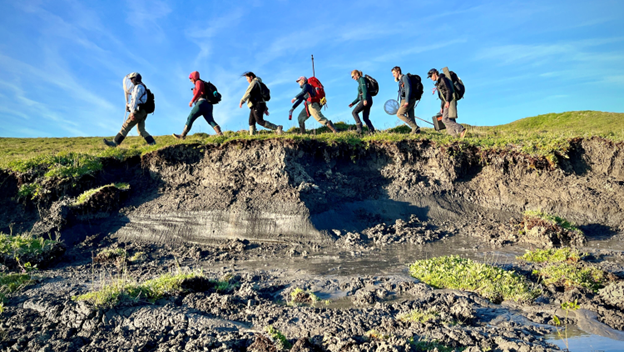
In Kluane, our field research is conducted near Kluane National Park in the Southwest Yukon. Kluane is a 2.5 hour drive (214 km) from Whitehorse and the nearest major airport and a 40 minute drive (60 km) from Haines Junction, the nearest small town. Facilities at the Outpost Research Station (KLRS) serve as a base camp. Outpost Research Station is operated by Icefield Discovery. The base is located on the Alaska Highway 40 minutes west of Haines Junction and about 3 hours from Whitehorse. There is no phone signal (but note that there is phone service at the nearby Kluane Lake Research Station if needed. At Outpost there are showers, laundry, internet – though you are encouraged to take short showers and limit your laundry use to minimize our impact on the facility’s resources.
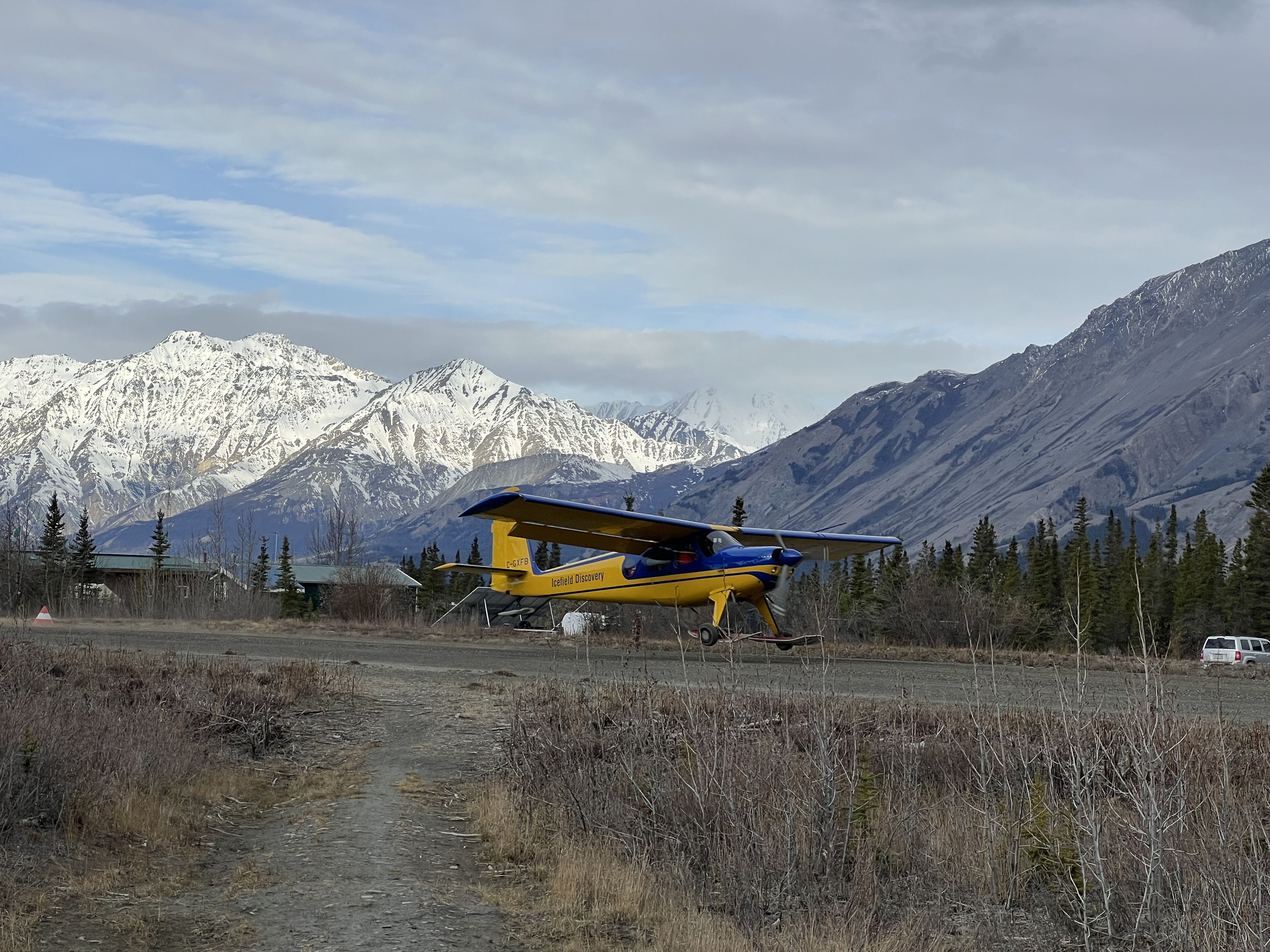
We also conduct research at (i) Pika Camp, located in the Ruby Range Mountains and is accessible from Outpost by helicopter or by a 1- hour drive on a gravel road and a 10 km hike uphill into the mountains, and (ii) the Kluane Plateau, located a 15 min drive and a few hours hike up a mountain from Outpost. http://www.outpoststation.ca
Base Address:
Outpost Research Station
phone: (867) 841-4204
Address: 211 Old Highway Road, Kluane Lake, YT Y0B 1H0
Email: info@outpoststation.ca
Qikiqtaruk – Herschel Island
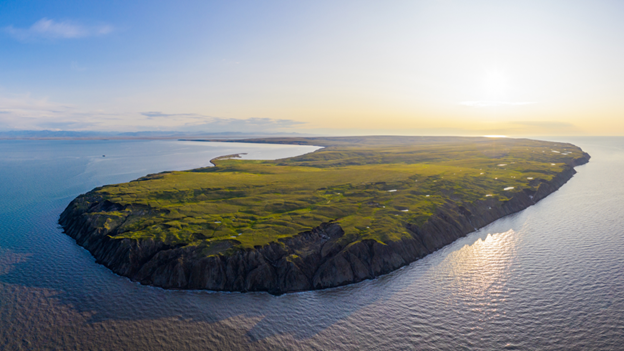
Qikiqtaruk – Herschel Island is a remote island off the Arctic Coast of the Yukon Territory and is a Yukon Territorial Park. Two Park Rangers (on 2 week rotations) are stationed on the island all summer and there are other visitors including local Inuvialuit people, tourists, researchers from the Alfred Wegener Institute (AWI) in Germany, other researchers from Canadian Universities and government institutions, the Coast Guard, Royal Canadian Mounted Police (RCMP), round-the-world sailors, etc. To get to Qikiqtaruk we fly for just over an hour in a chartered Twin Otter plane from Inuvik, a town of 5000 people in the Mackenzie River Delta in the Northwest Territories. Our research on Qikiqtaruk is coordinated out of the Aurora Research Institute in Inuvik.
http://nwtresearch.com/about-us/regional-research-centres/western-arctic-research-centre
Training
Team Shrub members should generally achieve the following training before the field season:
- Wilderness First Aid or Wilderness First Responder (confirm with Isla)
- Canadian Firearms Safety Course and then apply for your Possession and Acquisition Licence (PAL)
- Basic drone operators license (online exam)
- WHMIS (if working in the wet lab)
Usually Team Shrub has funding available to support this training. Talk to Isla about your options. Consider booking training in your first semester, to ensure you are set to go for the field season.
Other training you can consider:
- The Fundamentals of the First Nations Principles of OCAP: https://fnigc.ca/ocap-training/take-the-course/
- Ask Isla if your grant that you were hired under will cover the course fee.
- Understanding the Inuvialuit Final Agreement e-Learning Program: While more geared to those who are working in the ISR (North Slope and Qikiqtaruk folks), it could be an opportunity for everyone to understand how these sorts of agreements work! Here is a link to sign up for the online course: https://ifa101.com/ (click “LEARN MORE” under the e-Learning section and sign up)
Research Permits
There are annual permitting and reporting processes for all field work in Team Shrub. Note that if you completed field work in a previous year and are no longer going to the field you may still have to contribute to ongoing reporting in subsequent years.
We must get permission to do field work from the Yukon government as well as permission to work in territorial parks. Team Shrub typically reports to the following agencies and parks:
Parks Canada: National Parks (https://parks.canada.ca/nature/science/recherche-research)
Yukon Parks (and BC Parks): Territorial Parks (https://yukon.ca/en/doing-business/permits-and-licensing/get-territorial-park-permit)
Scientist and Explorer Act Licences (S&E): To conduct research in the Yukon (https://yukon.ca/en/science-and-natural-resources/research-and-monitoring/apply-scientists-and-explorers-act-licence)
We apply as a team to each permit needed, but each student is responsible for providing a description, methods and plan for their project to include in each permit application.
Quick guide to S&E application process:
- Interim report
- Summary of the previous summer fieldwork.
- Includes: work completed, data collection overview, and preliminary findings.
- Can include figures, graphs, photos of field sites or equipment.
- Written in plain language.
Each report is uploaded to the Team Shrub website: https://teamshrub.com/research-reports/
- Consultation emails
- Summarize planned research activities for the upcoming field season in each area.
- With the consultation emails, we attach the interim research report and the draft of the S&E permit application.
- The emails are drafted as a group and sent by either Isla directly or another Team Shrub member.
- Deadline: Must be sent at least 1 week before the permit application deadline.
- Permit application
- Describe background, methodology of each project related to the permit.
- Submit 2 months before the start of the field season.
- Deadline: End of March.
- Previous permit application can be found in the Team Shrub google drive
Example files:
Other permits you may need:
- Environmental Impact Screening Committee
- Research and Collection Permit
- Landing, Firearms, & UAV Permits
- Research and Collection Permit
- Landing, Firearms, & UAV Permits
Permit Timeline
| January - February | Start interim report Begin thinking of upcoming projects and summer plans |
| Early March | Finalize interim report Start drafting permit applications Coordinate with everyone on project descriptions |
| Mid-Late March | Consultation emails |
| End of March/ April | Submit permit applications |
| April - May | Respond to any follow up questions or requested revisions |
| June - August | Fieldwork under permit approval |
| Fall/ Winter | Start preparing for the next interim report |
Tips for what to expect in the field
- When based in the field camp on Qiqiktaruk conditions are fairly basic, no showers , limited communications (good Starlink connection), limited electrical power (occasional power outages, but the camp has a generator), life in tents (lots of beds inside buildings, maybe tents in buildings if it’s crowded). Days can be strenuous with lots of hiking and having to work in the rain/snow or other inclement weather conditions. On Qikiqtaruk there is a sauna and you can swim in the ocean to keep clean. Clothes washing is brackish or salt water. There are cabins that we will be able to use for cooking and living and some people will get to stay indoors, likely for at least a part of the summer, but be prepared for roughing it a bit.
- When camping out or on Qikqitaruk, cooking and cleaning are shared responsibilities. Usually a cooking rotation is set up so that each person cooks one day and then does dishes the next. You may want to research some back country cooking recipes in advance if you are not already an expert cook. On Qikiqtaruk we will also have frozen food such as bread, meat, cheese, veggies and lots of canned goods, but fresh food will be limited. Make sure you are also aware of any dietary requirements of team members.
- Entertainment usually consists of card games, reading, playing guitar, watching movies on a laptop, etc. Be sure to bring books, music, movies (download your favourites before we go), and games up to camp with you. You may want to bring an MP3 player for listening to music when doing more tedious field work. Charging can be limited so don’t rely too heavily on power-hungry electronic equipment. A power-pack for your phone can be very useful, and can be used for field equipment (drone remotes).
- Work schedules vary from starting at 0800-1000 and working until around 1800- 2200. The work often involves some hiking around with a potentially heavy backpack and some more strenuous or tedious work at points. There will be days off at points, but sometimes the work will require working for periods of time until a project gets done, a field trip is complete or experiment is finished, etc. There will not be “weekends”, though there will be plenty of socialization and fun. An important holiday each field season is Solstice on the 21st of June, which is celebrated with a bonfire party. We also hold an annual Scottish Feast on Qikiqtaruk each summer on the first stormy day that is convenient for all of the island’s (human) inhabitants.
Packing List
| Item | # | Notes |
| Hiking boots, rubber boots, winter boots, shoes, booties | Several different pairs of footwear | You will want a very sturdy pair of water resistant hiking boots (leather or sturdy synthetic), you will also probably want rubber boots as it can be wet around camp, and if you are staying into September you may want winter boots, you may also want runners for around camp or down booties for in your tent. |
| Warm jackets, sweaters | A few different layers | You will want a fleece jacket and a warmer jacket such as a down jacket, a down vest is also useful, lots of layers are a good idea such as wool/fleece sweaters and thermal (smart wool) undershirts. |
| Waterproof jacket, pants (aka trousers), and gaiters | 1 (or more) | Sometimes it is nice to have a really beat up/cheap pair of rain pants for heavy work in the shrub (more waterproof) and a nice pair for hiking (breathable), gaiters can be very useful for saving wear and tear on your pants and for keeping your feet dry. |
| Thermal underwear | 2 pairs (or more?) | Smart wool is best, silk long underwear can be nice for hiking |
| Socks | Lots (~6 pairs or more esp. if long duration in the field) | Smart wool socks are the best given that you will often have wet feet, you may want liner socks |
| Hats | A couple | You might want a couple of warm toques (woolly hats) in case one gets wet or if it is really cold you might want to wear both! And you should bring some sort of sun hat, especially for work at Kluane. |
| Mitts and gloves | Several pairs | You will want different pairs as they may get wet, liner mitts with gortex/waterproof covers are good, you may also want liner gloves, a pair of insulated work/garden gloves is often useful, neoprene gloves are very nice for cold wet days when your hands are going to get wet, you may want a nice pair of fleece gloves to sleep in. |
| Scarves or neck warmers | 1 - 2 | Fleece neck warmers can be very good to sleep in and can also be worn on particularly cold days |
| T-shirts/long-sleeved shirts | ~4 | For everyday wear, occasionally it will be warm enough that you will not need your sweaters and jackets and the T-shirt will come in handy, you may want a light long-sleeved shirt for hiking up to camp through the woods in bug season. Don’t forget your Team Shrub t-shirt for dorky group photos! |
| Quick dry pants | ~2 | For every day wear you will want a few pairs of hiking/quick dry/outdoor pants. Tough, good quality field pants are invaluable for your comfort. |
| City Clothes | 2 outfits | For trips into the big city of Whitehorse, you will want some city clothes. I suggest you bring shorts – while we work in the Arctic, don’t forget it is still summer and can get very warm in the cities. |
| Sleeping bag and liner | 1 | You will want a decent bag, preferably rated to around -5 to -10 for the main season, and -10 to -20 if working in September, you can also get a liner bag to increase the versatility/warmth of your sleeping arrangement. (good for keeping mosquitoes off on warmer evenings). It is better to err on the side of being too warm, than not warm enough |
| Sleeping pad | 1 | You will probably want one hiking type sleeping mat such as a thermorest, since you don’t have to hike your gear in at the beginning of the season you may also want a more cushy foam mat or even a blow up mattress to make your sleeping set-up more comfortable. You may also want to bring up a small pillow, or you can probably buy one in Whitehorse. |
| Day Pack | 1 | You will want a backpack for taking out each day, large enough to carry your lunch, warm clothing, and some gear |
| Hiking Pack | 1 | You will want a comfortable medium to large volume hiking backpack to carry your things in and out of the field during the season, and occasionally to use or fieldwork to carry heavier loads. |
| Hiking Poles | You may want hiking poles especially if you have problems with your hips or knees on long strenuous hikes | |
| Sunglasses |
Other items to bring:
| Item | Notes |
| Water bottles | In case you lose one, one to keep in your tent and one for your bag |
Small flashlight/headlamp |
For most of the summer, it will be pretty light all the time and you won’t need a flashlight, but in August onwards you will need a light of some sort. |
| Sunblock - see first aid below | |
| Baby Wipes!!! | |
| Camera | |
| Binoculars | Useful to tell whether that is a bear or a muskox walking approaching! |
| Books | |
| MP3 player | |
| DVDs/movies | |
| Art/writing supplies | |
| Envelopes and stamps | |
| Towels/face cloths | |
| Toiletries | Whatever you will need to last a few months in the wilderness (feminine products, toothpaste, 2 tooth brushes in case you lose one, floss, hair brush and hair ties, nail care equipment, a bit of hand soap, a small container of shampoo, moisturizing cream, a personal supply of some basic meds (tums, Tylenol, ibuprofen, antibiotic, antifungal, and anti-itch cream, etc.) |
| Other items that you will crave | Such as chocolate, candy, specific food items that are hard to get in Whitehorse or Inuvik. |