Research
The official guide to being a UBC Forestry Grad Student and all the rules and procedures can be found here.
Funding opportunities
An expectation of being a grad student is that you will take the time to apply to grants and awards where relevant. As a member of Team Shrub, you should consider if the awards included in this database (created by Jordan Seider) are relevant to you. Some key awards that you should apply to are:
UBC Four Year Doctoral Fellowship (4YF): You must apply at the same time that you are applying to admission to UBC
NSERC CGS-M and NSERC CGS-D (depending if you are a MSc or PhD student): Note that the internal deadline for the PhD level grant is very early in September. Consider working on this the summer before you begin if you have a September start. Remember to read the applicant guide thoroughly.
Northern Scientific Training Program (NSTP): This is a logistics funding request for field research conducted as a part of your graduate studies
Weston Family Awards in Northern research: Prestigious northern-focused research awards. Due dates are typically in January.
It is good practice to find and keep an eye on the official websites for various awards. Dates for awards are often updated late, and can be subject to change with less notice than we would like. If there is an email to sign up for notice of when a grant opens, please consider signing up, and remember to share any information you find with the lab, or add it to the database.
Another resource for keeping an eye on award opportunities is on the Department of Forestry’s page with information on Awards and Financial Aid.
Proposal Writing
Proposal development should be one of the major goals of your first semester. You should aim to have a proposal developed and approved by your committee before your first field season. After your first committee meeting you will expand your mini-proposal into a full proposal to be later approved by the committee.
Check out this guide on writing a mini proposal by Dr. Nicholas Coops (27 minutes)
https://www.youtube.com/watch?v=CjQuJqhK1z8
Note: There are some things about this video that is very targeted towards methods development in remote sensing, so broaden that content out in your mind, you want to be testing ecological questions in your work, and probably not coming up with a remote sensing method, but the general advice is really good in this video, so definitely worth watching! And the structure that he is suggesting is pretty much the same as what Isla suggests (see below).
Other tips and instructions from Isla:
Aim for three or five pages per chapter and maybe something like 12 (MSc) - 20 (PhD) pages overall.
In addition to or combined with the “expected outcomes” include an “anticipated results”, this is where you articulate what potential things you might find with respect to your research questions. It is great if you can express the alternative things you might find and then what it will mean if you find one thing or the other. It can also be really effective to draw out figures showing the expected relationships that you might find and the co.
It is helpful to make an overall conceptual diagram for your thesis for the intro section of the proposal that shows how different chapters (if you have more than one) fit together as one whole project.
Here are some example PhD proposals from students at the University of Edinburgh (at Edinburgh they are called “confirmation reports”):
https://drive.google.com/drive/folders/18a2A__OZlDmDLhnSIUZP-buSAnOhWlkU?usp=sharing
Here is a link to Hana’s PhD mini-proposal and final approved proposal.
Here is a link to general Team Shrub proposal writing resources [1, 2]
Zotero
We are a Zotero lab! Mendeley is owned by publishing giant Elsevier and has been made more and more ‘private’ and inaccessible over time. Mendeley has a number of usability challenges these days (including not being able to be used offline).
Zotero is a better app, and also has the benefit of being open-source!
You can download Zotero here.
You can access Team Shrub’s Zotero Library here.
Here are instructions for increasing your Zotero sync limit. It’s a guide for setting Zotero up with a WebDAV based sync (specifically with the cloud storage company Koofr), which will get you up to 10GB of free storage to hold your Zotero library. That’s much more than the 300mb that Zotero offers for free. The process is officially supported by Zotero, so it’s fairly simple to set up. The only thing it can’t do is sync group libraries.
Graduate school milestones
1) Forming a committee and planning the first committee meeting
If you started in September, you should have your committee formed by the end of March and a plan in place for a first committee meeting in April. If you started in January, it is still a good goal to have your first committee meeting before the summer field season. Throughout your degree you are required to have one committee meeting per year.
Here are the steps to set-up your first committee meeting:
- Talk to Isla to confirm who you want to invite on your committee and get advice. For a MSc you will need 1-2 committee members and a PhD will need 2-4. They are generally academics, but could also be research scientists or community partners.
- Reach out via email to your potential committee members. Send them a brief summary of your research interests and see if they are keen. You might change your plans on who to invite depending on who says yes to the dress.
- Once you have confirmation from your committee members, set up an email to introduce them all to each other and make a when-to-meet to set up a time for the first committee meeting.
- Draft your mini-proposal. This should include relevant background information, your proposed research questions and hypotheses, your field plans, your degree timeline and what you have accomplished so far. Get feedback on the mini-proposal from Isla/peers and aim to send it out to the committee at least one week before the committee meeting.
- Prepare a 10 minute presentation for the committee meeting introducing yourself and outlining your proposal. Finish with questions or discussion points for the committee.
- Send out email reminders and re attach all documents in the reminder, so things are easily accessible.
- Follow up with Isla about writing and submitting the committee meeting paperwork. To the grad studies office after getting written feedback from your fellow committee members.
2) Courses
Remember, your priority is your research and your own research development and courses can be a distraction from you working on your project and gaining specific skills that you need. Some courses are a lot of “busy work” and some aren’t that useful, but others will really re-shape your thinking and be super useful for your project.
For MSc students, please take the 18-credit MSc, so you don’t have to take too many courses. Make sure that your courses are geared towards supporting your research and development as a scientist.
For PhD students, you don’t need to take any courses, though you can take courses. Generally we recommend that you consider auditing courses rather than getting assessed, but still fully participating if you do sign up.
Grad students can take courses in departments and faculties across UBC (not just the Faculty of Forestry). So, you might want to explore grad courses in other departments:
- Biology (Zoology or Botany - great for more ecological courses and statistics and data science courses),
- EAOS (for hydrology, more permafrost adjacent courses, etc.) and
- Geography (plant ecology or hydrology or GIS).
- FRE (Food and Resource Economics, in the Faculty of Land and Food Systems)
Here is some info on what courses other students have taken in the past.
Some courses that are recommended by Team Shrub students and/or Isla include:
Principles and Practices of Community Engaged Research | Dr. Sarah Dickson-Hoyle
- This course is primarily suitable for thesis-based students with developing or existing community research partnerships, or for highly motivated graduate students intending to conduct community engaged research. MF students who are interested in this course are encouraged to reach out to the instructor to ensure suitability and fit.
Indigenous Research and Data Governance | Dr. Warren Cardinal-McTeague
- This course is restricted to students in thesis-based programs and suitable for students with an existing or forthcoming research partnership with an Indigenous community(s)
3) Comprehensive exams (PhD only)
In your second or third year of your PhD you will need to pass your Comprehensive Exams to be admitted as a PhD Candidate. The following text is adapted from the Forestry Graduate Student Handbook:
The Comprehensive Examination is intended to test the student’s understanding of their chosen field (s) of study and assess the student’s preparation for the thesis research to follow. This examination is not a defense of the research proposal and is not intended to query the specifics of the proposed research.
At least 3 months prior to the examination, you should meet with Isla and the Associate Dean to discuss the examination purpose, scope, format, criteria for evaluation etc…
Scheduling the pre-comp meeting should be arranged with the Graduate Research Programs Manager (justin.holme@ubc.ca).
Also at this time (at least 3 months in advance of the expected exam date), you should contact all members of the Examination Committee to discuss readings and other preparation for the exam. You and your committee will set a reading list for the exam. Usually this is 10-20 papers/books/reports per examiner. You will also need to prepare a short presentation (10-minutes) on your research area and context of the project. Note this is not a presentation of your methods or your proposal!
Arranging a time and date for the exam is the responsibility of the student and supervisor, and may be finalized any time after the pre-comp meeting is held.
Once a date has been confirmed with all the examining committee members, the Forestry Graduate Program office should be notified and grad staff will complete the scheduling and reserve an appropriate room. Comprehensive exams are normally held in person. In some cases, Zoom may be an option.
The exams takes the following format:
- Introduction by the Chair
- Brief presentation by the student
- Initial round of questioning 12-15 minutes per examiner
- Second round of questioning 5 minutes per examiner
After you pass you can finally say you are a “PhD Candidate”!
Hana’s comprehensive exam presentation slides can be found here.
4) Defence
Rules and procedures for final MSc and PhD defence can be found here.
You will need to work backwards from your target defence date likely 4 months in advance for a PhD.
For a PhD defence the examining committee will be made of: exam chair (doesn’t typically ask questions), 1 external examiner, 2 university examiners, 1-2 members of your committee (not more than 2!), and the supervisor.
For an MSc defence the examining committee will be: exam chair, a non-departmental examiner, 1 committee member and your supervisor.
The basic steps to planning a PhD defence are:
- Finding an external examiner and getting them approved by graduate studies (the examiner must not be from UBC, AND must not be a close collaborator with the PI or anyone on the committee)! The identity of the external examiner is supposed to be a secret from the student until after you submit the dissertation.
- Set a date for submitting your final dissertation to the external examiner, usually 8 weeks after your supervisor nominates potential examiners to graduate studies. This is the final due date for your dissertation and once you set it, it is NOT flexible. You will need to restart the whole process of approving an external examiner if you miss this deadline. Send drafts of your dissertation to your committee as you write.
- Before the deadline, submit the dissertation to the external and wait for their report. They decide whether you can proceed to the defence and can also make recommendations for revisions to the dissertation prior to the defence.
- Once the dissertation is approved by the external examiner you need to find 2 university examiners. They can be anyone from UBC or UBC-Okanakan, just not on your committee. Submit the dissertation to the university examiners.
- Set a defence date at least one month (minimum 2 weeks for MSc defence) after the examining committee has received your thesis/dissertation.
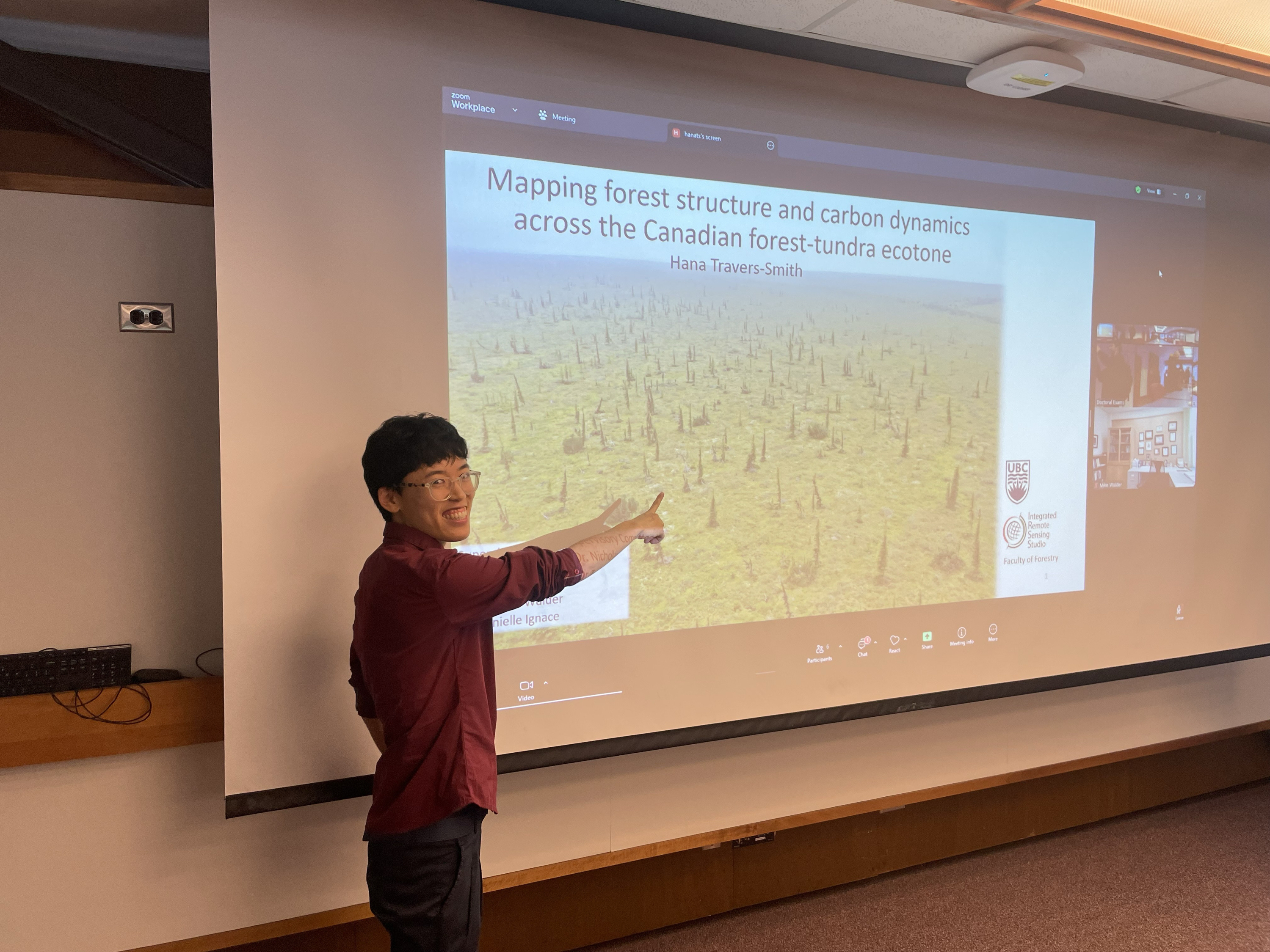
- Prepare a presentation outlining your research in 25-30 minutes. This is a presentation geared towards the public, and should give a high-level overview of the methods, key results and significance of your work, with an emphasis on significance! The best advice I received preparing the defence was to “do it for your mom”!
Note that for a PhD defence you only need 2 people from your committee to be examiners (the supervisor and one other). Everyone on the committee can attend, but having fewer actual examiners at the defence does make things easier for you!
Structure of the dissertation/thesis
he thesis/dissertation will generally follow this format:
| Sections | Specifics |
| Administrative | Title page, certification page, abstract, lay summary, preface, table of contents, list of tables/figures, list of abbreviations, acknowledgements, dedication |
| Chapter 1 | Introduction and literature review - based on proposal & parts of introduction of your papers |
| Chapter 2 | Study area (and in some cases also Data if consistent across chapters) |
| Data Chapters (3-4 for MSc and 3-6 for PhD) | Individual manuscripts for each research question including introduction, methods, results, discussion and conclusion. These chapters should mirror closely published papers/should be written as publishable “units” of research. |
| Final Chapter (5 for MSc and 7 for PhD) | Conclusions, overview of significance, implications, limitations and future work of the overall body of research. |
Tips: Start writing early and often! You should be writing your thesis as you go with this structure in mind. Your literature review/introduction chapter can be adapted from your proposal document. Each data chapter can be written as you complete analysis for each question and work to publish individual papers.
Conferences
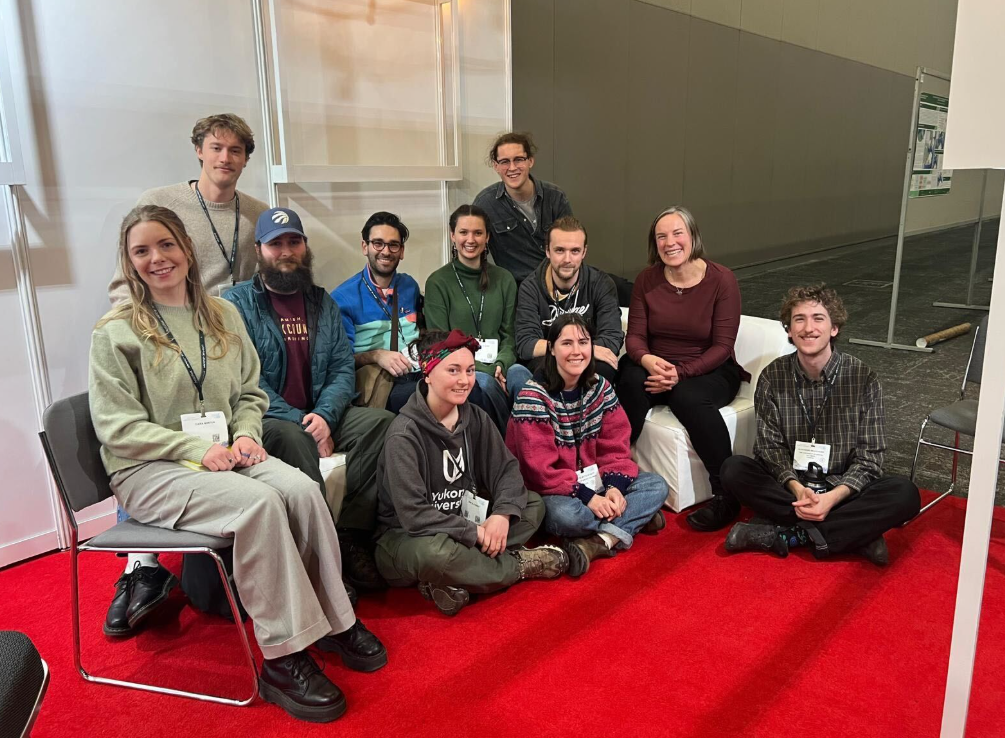
The lab will pay for you to attend 1-2 conferences per year, up to a cost of $2000/ student. You are encouraged to attend conferences beginning in your first semester. You do not need to have data yet. Poster presentations work well for students who do not have results to present. If you presented a poster at a conference the previous year, you should opt for an oral presentation the following year.
Some conferences to know about/ consider attending include (in no particular order):
- Yukon North Slope Conference
- Braiding Knowledges Canada
- Arctic Net
- Canadian Society for Ecology and Evolution Meeting
- ITEX Meeting
To get compensated for expenses at conferences or in the field you can submit an “Expense Report” in Workday. Ask Pauline for the relevant worktag (lab funding account) to complete this form.